Clearing Floating Pennywort from the Lea
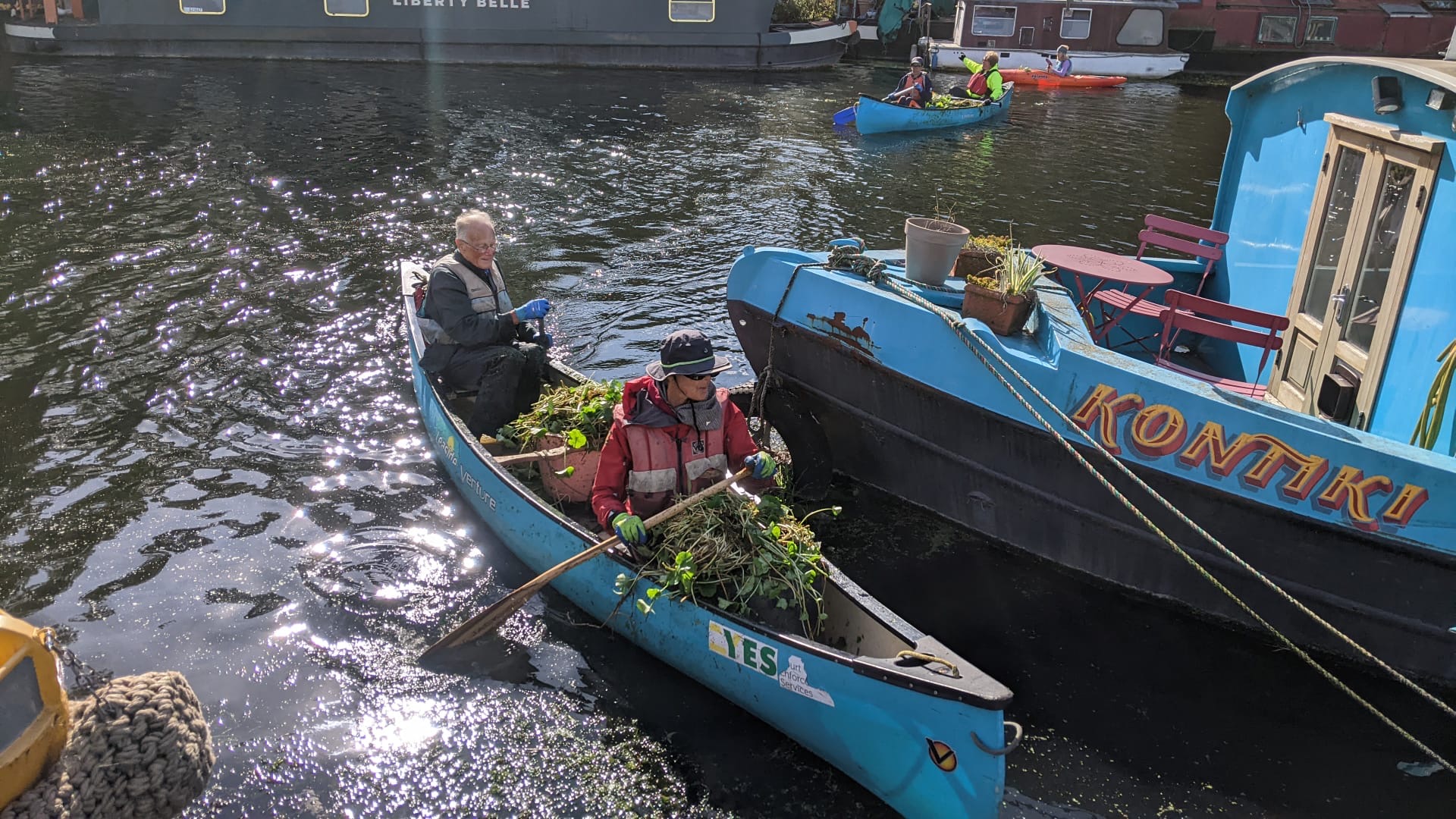
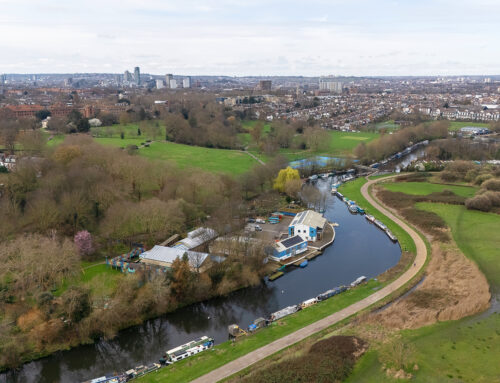
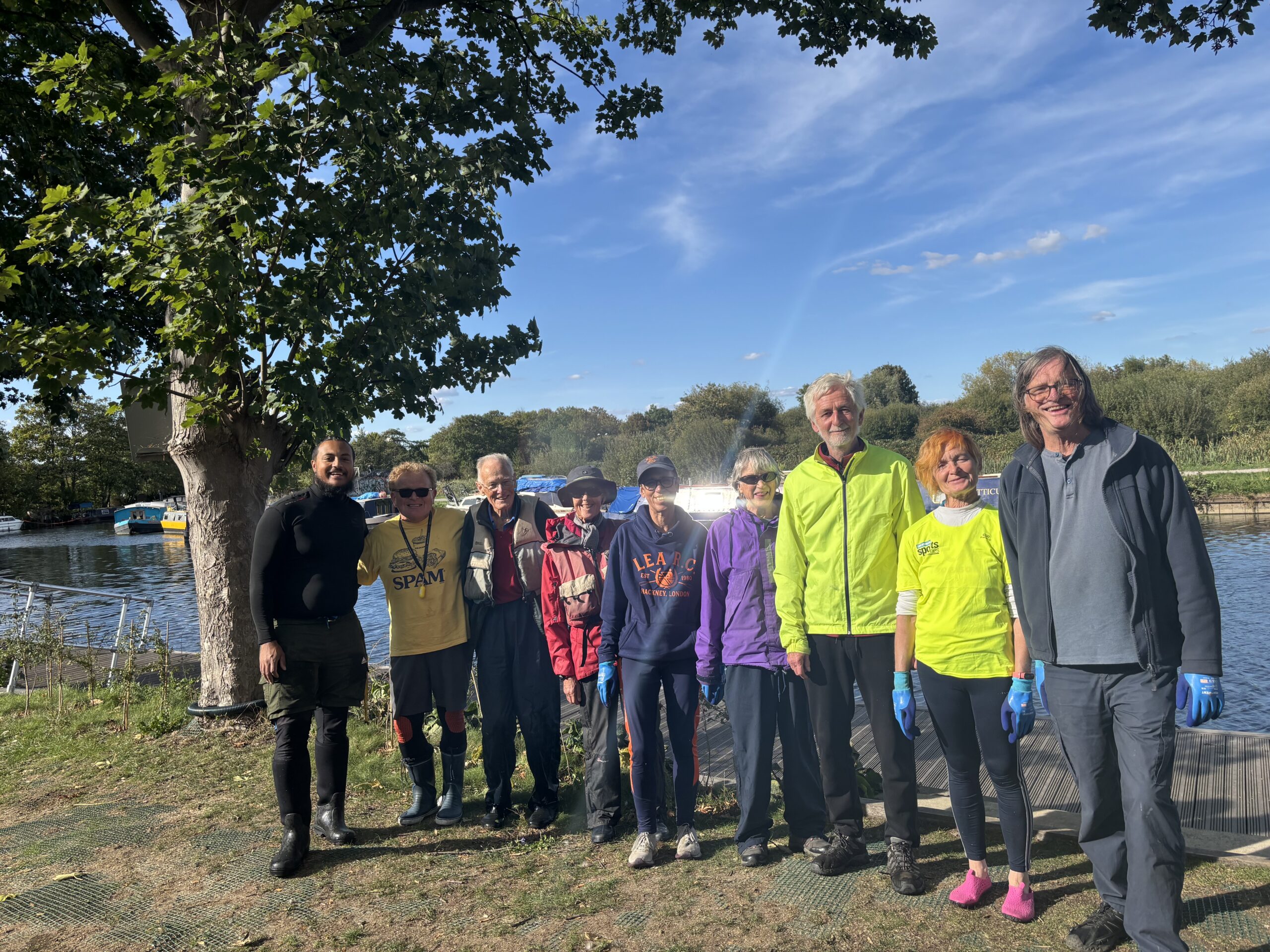
On Wednesday 24 September, Pippa Rowlandson, Environment Project Lead for the Floating Pennywort Project coordinated a focused volunteer session to remove floating pennywort on the River Lea. With the main rafts already mechanically cleared between Tottenham and Lea Bridge, we used canoes and kayaks to reach the stubborn patches tucked between moored boats, under overhanging vegetation and around pilings. By the end of the afternoon our bank team had composted around 25 trug buckets, a rough, bank-side estimate of ~2 tonnes of material, and we finished with a full Check–Clean–Dry of boats and kit to prevent fragments travelling.
Why floating pennywort is such a problemWhy floating pennywort is such a problem
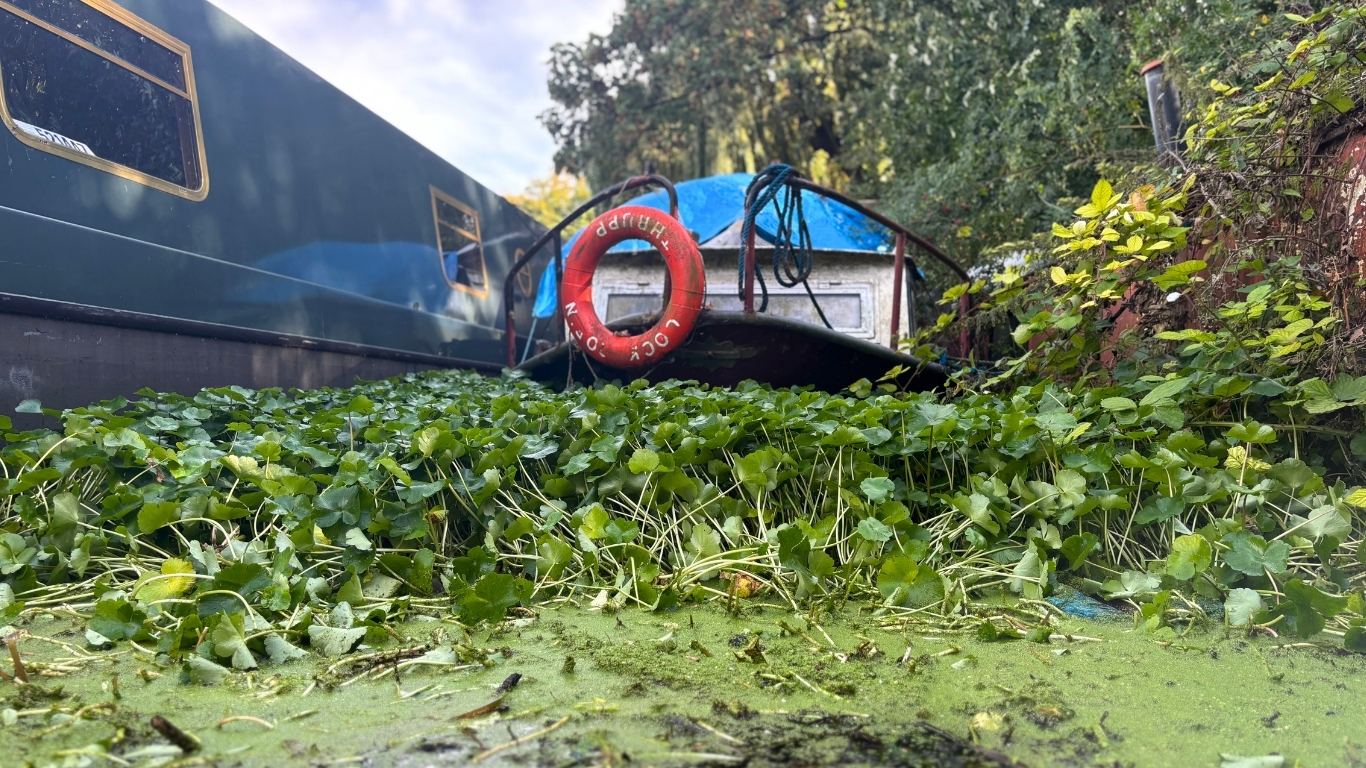
Floating pennywort (Hydrocotyle ranunculoides) is a non-native invasive aquatic plant that spreads explosively in warm months. Even tiny fragments can root and form new plants, so once it’s established, it can recolonise quickly unless you keep at it.
What makes it so damaging:
- Rapid growth & thick mats
- It can extend centimetres per day, forming buoyant rafts that are tough to push through and even tougher to break apart once mature.
- Choking waterways
- Mats block channels, slips and bridges, creating hazards for paddlers, rowers and rescue craft, and increasing flood risk by clogging structures.
- Ecological impacts
- Dense cover shades out native plants, slows water, and traps silt and litter. As mats die back, they can deplete oxygen, stressing fish and invertebrates.
- Costly to ignore
- If left, small patches become large, requiring heavy plant and recurring spend. Early, repeated, community-led removal saves time and money.
How we target it on the Lea
- Pairing mechanical and hand clearance
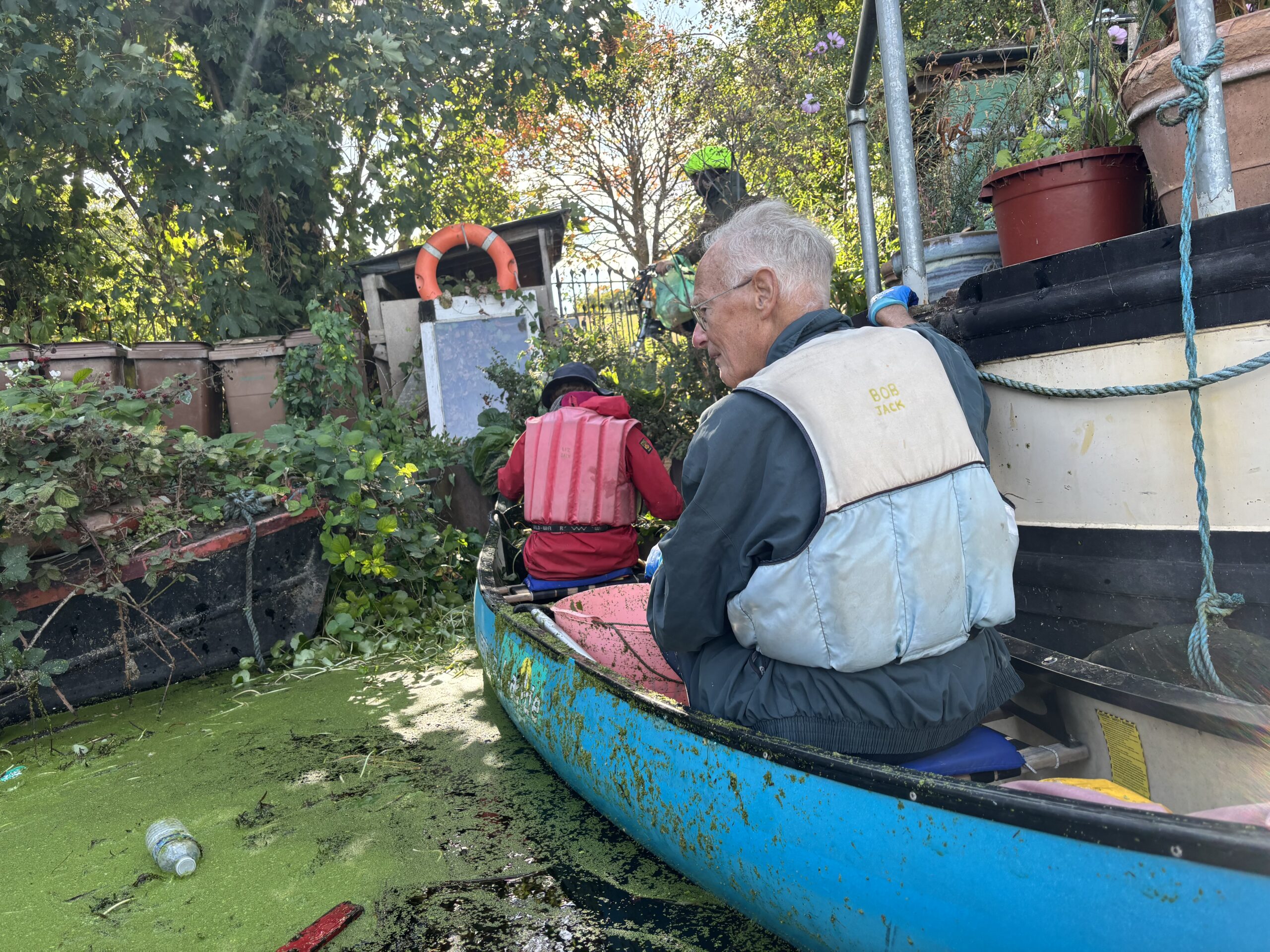
- Mechanical works remove the bulk quickly. Our paddle teams then search the edges — the places machines can't reach , to prevent re-growth.
- Precision lifting
- From boats, we lift whole sheets where possible, draining them before transfer to the bank to reduce fragment escape.
- Bank management
- Material is contained and composted well away from the water on prepared ground. We never dump it back near the river.
- Biosecurity every time
- We follow Check–Clean–Dry: inspect, wash down hulls/paddles/PFDs, and allow to dry. This step is as important as the removal itself.
How to spot it (and not confuse it)
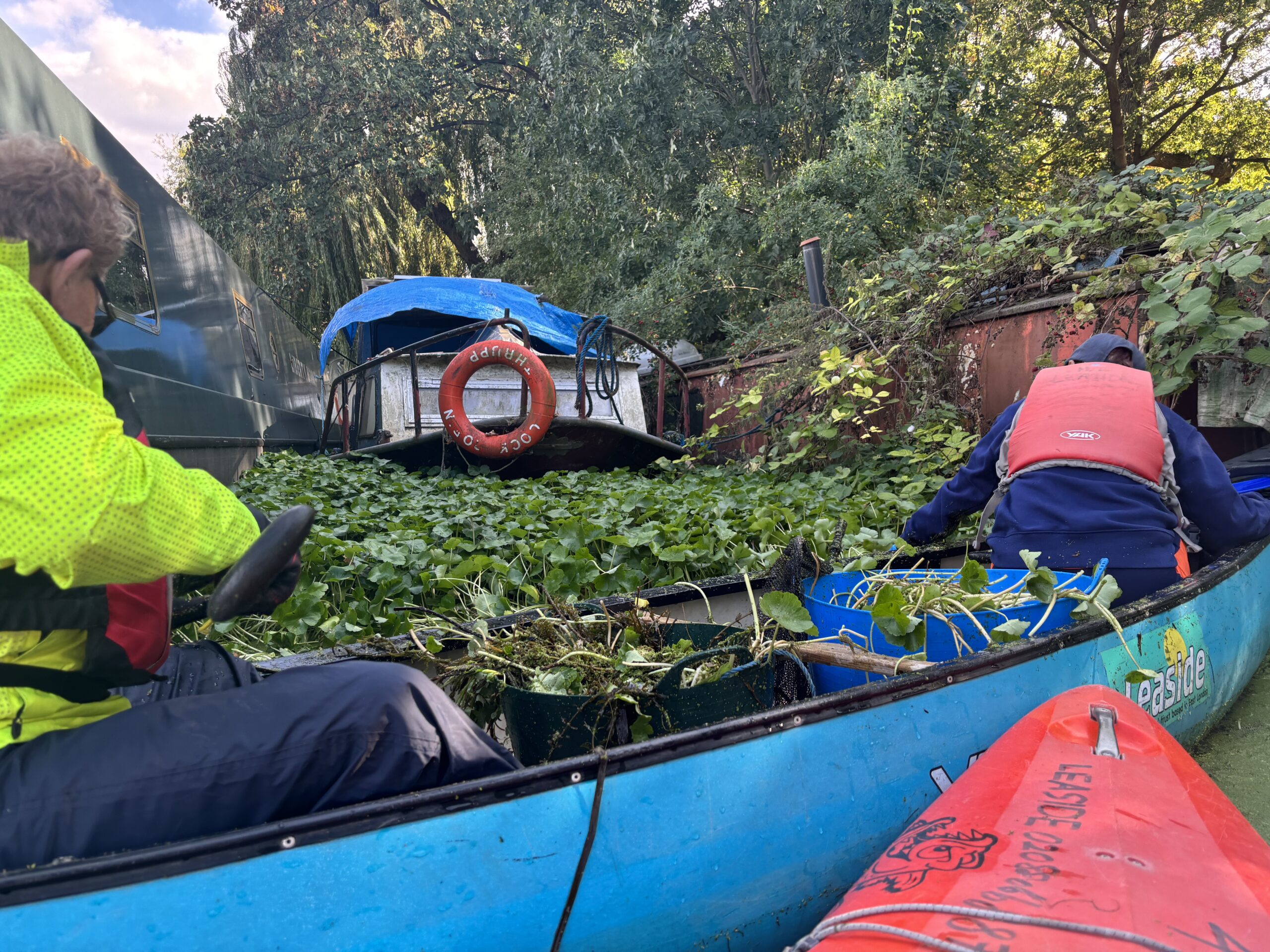
- Leaves: round to kidney-shaped, with a deep notch and a stalk that meets the leaf off-centre; fleshy and slightly waxy.
- Habit: forms floating rafts with long, crisp green runners; new roots at nodes.
- Look-alikes: Our native marsh pennywort (Hydrocotyle vulgaris) tends to sit in damp margins rather than forming thick floating mats across open water.
If you're unsure, photograph the leaf and the whole patch and note the location.
When and where removal works best
- Late spring to early autumn is prime time: plants are visible and easier to lift in sheets.
- After mechanical clearance is ideal for follow-up sweeps — exactly what we did this week.
- Upstream first: we prioritise upstream sources to stop constant reseeding downstream.
What we achieved this session
- Area: pocket patches between moored boats on the Tottenham → Lea Bridge stretch
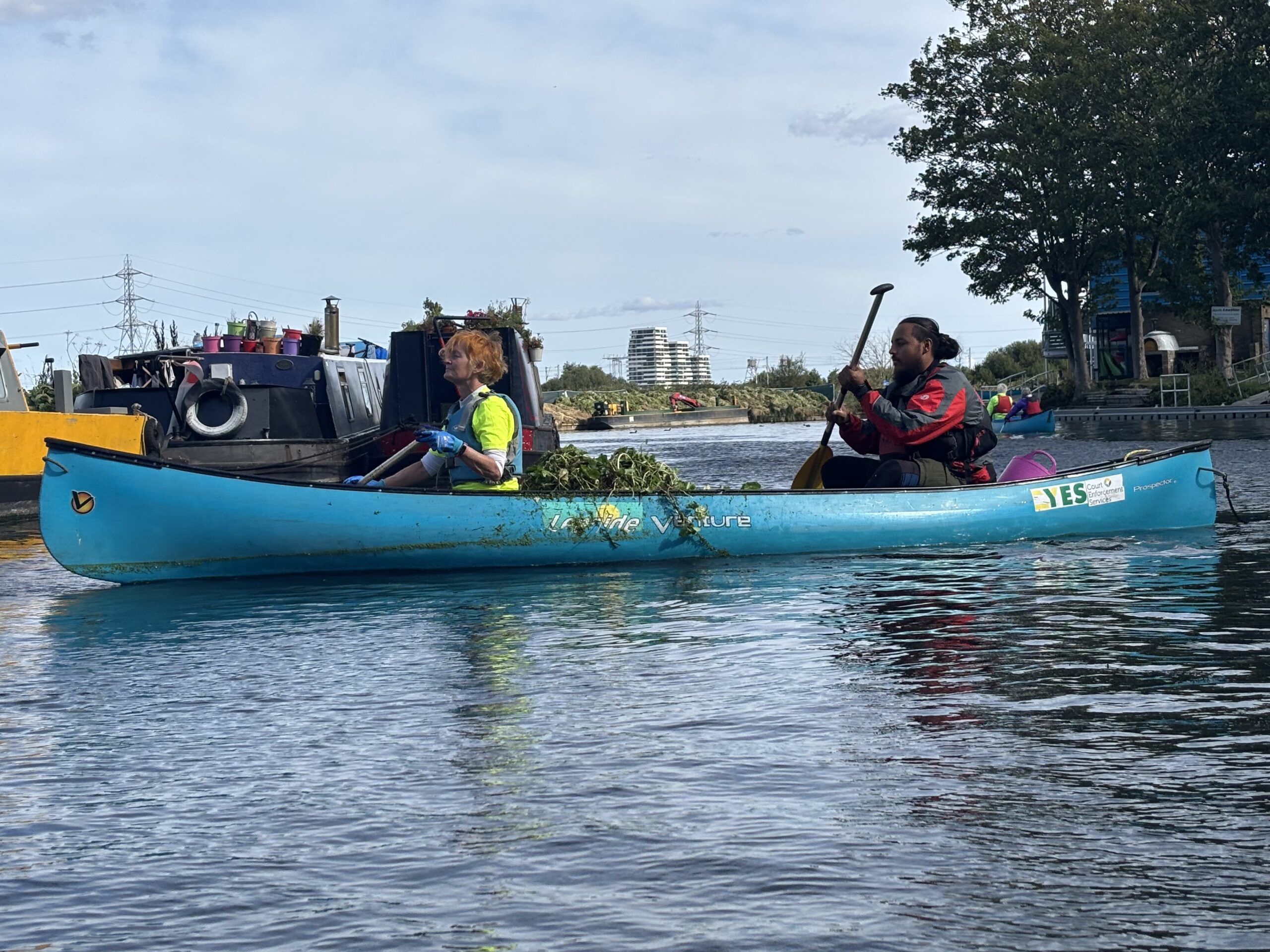
- Method: boat-based precision lifting + bank containment
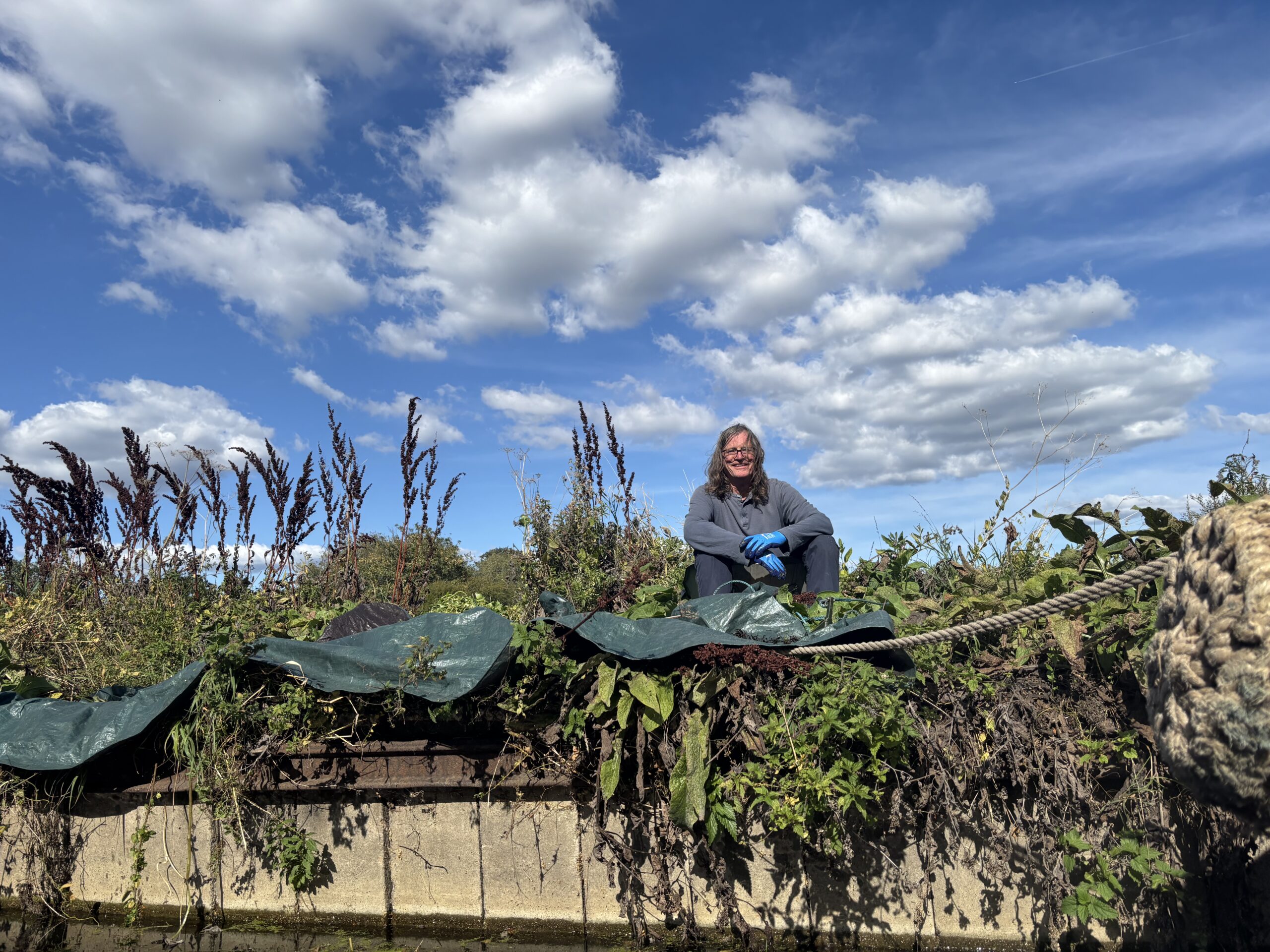
- Material managed: ~25 trugs (~2 tonnes, bank-side estimate)
- Safeguards: full Check–Clean–Dry on all equipment
What’s next
Our next focus is further upstream, where small patches can quickly undo downstream gains. We’ll continue regular spot-clearance through autumn while conditions are safe.